b0nus

The Real Future of Crypto Gaming in Singapore

18clubsg

Disclaimer: 18ClubSG is strictly an educational hub. We do not facilitate betting, and we do not promote real-money gaming. We are here to provide the intelligence you need to understand the mechanics of the iGaming world—clearly, honestly, and without the hype.

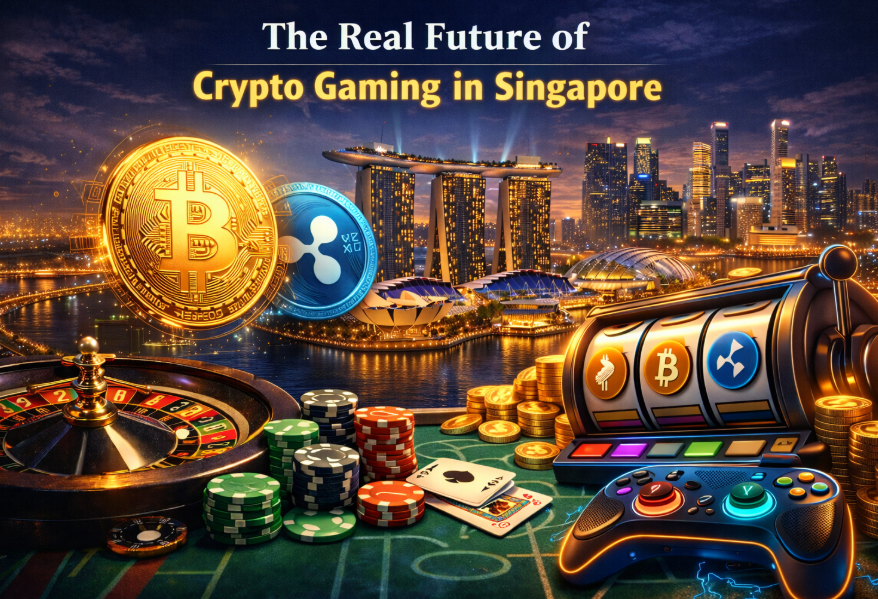
“Illustration of crypto gaming in Singapore with blockchain network over Marina Bay skyline”

Crypto Gaming in Singapore: Between Hype, Regulation, and Reality

Crypto gaming has never been short on ambition. From blockchain casinos promising full transparency to play‑to‑earn ecosystems that once claimed to replace traditional income, the narrative has always leaned aggressively futuristic. But in Singapore, the future of crypto gaming is not being shaped by hype cycles—it is being shaped by regulation, infrastructure maturity, and operator discipline.

As someone who has worked closely with regulated iGaming environments and emerging Web3 gaming models across Southeast Asia, I’ll say this plainly: crypto gaming in Singapore will survive, but it will not look like what Web3 maximalists originally imagined. Instead, it will resemble regulated fintech more than anarchic DeFi, and serious gaming infrastructure more than speculative token farms.

the real future of crypto gaming-in-singapore

Singapore Is Not Anti‑Crypto It’s Anti‑Chaos

A common misconception is that Singapore is hostile to crypto gambling or blockchain gaming in general. That is not accurate. Singapore’s stance is subtler and far more specific.

What Singapore is reliably hostile to is:

  • Anonymous financial flows with no accountable counterparty
  • Unlicensed operators targeting Singapore residents via remote channels
  • Consumer risk without clear recourse, disclosure, or supervision

Under the Monetary Authority of Singapore (MAS), most crypto activities fall under digital payment token (DPT) and digital token service provider (DTSP) regimes—treated as regulated financial services, not toys.https://www.mas.gov.sg MAS has made it clear through guidelines and amendments to the Payment Services Act that DPT firms must implement strict AML/CFT controls, custodial safeguards, and user protection standards if they want to operate from or in Singapore.

Layer this over the Gambling Control Act and the Gambling Regulatory Authority (GRA)’s framework for remote games of chance and unlawful remote gambling, and the path forward becomes clear.Crypto gaming in Singapore can exist only if it behaves like a serious financial and regulated gaming product, not a loosely governed offshore casino.

This immediately filters out:

  • Offshore crypto casinos that market aggressively to Singapore players without a local licence
  • Projects that treat anonymity as a core “feature” rather than a risk
  • Token‑based gambling models that offer speculative upside without provable consumer safeguards

Singapore is not saying “no” to blockchain or Web3; it is saying “yes to digital asset innovation, no to cryptocurrency speculation,” echoing the MAS positioning highlighted in Singapore’s Onchain State report.https://www.onchainstate.sg

The End of the “Anonymous Crypto Casino” Model

Let’s be direct: anonymity was the original selling point of many crypto casinos. No KYC. No banks. No oversight. Just a VPN, a wallet, and a “provably fair” badge on the footer.

That model has no future in Singapore.

Recent MAS moves to tighten oversight of digital payment token service providers, including stricter AML/CFT controls and expanded regulatory scope under the Payment Services Act, explicitly target high‑risk, opaque business models. At the same time, the GRA has reiterated that it will not allow cryptocurrencies inside land‑based casinos and is closely watching how crypto is used in online gaming and social games under technology‑neutral remote gambling rules.

Any crypto gaming platform that wants long‑term relevance connected to Singapore will need:

  • Full KYC/AML compliance aligned with MAS standards
  • Transparent wallet flows and documented on‑chain audit trails
  • Clear custody structures for customer assets under licensed entities
  • Responsible gambling tools and controls comparable to regulated fiat casinos

This does not kill crypto gaming—it professionalises it. But that is precisely where most play‑to‑earn, casino token, or degen‑style projects fail. They were built for maximum leverage and speculation, not for compliance‑grade, regulator‑friendly operations.

Where Crypto Gaming Does Make Sense in Singapore

Crypto gaming in Singapore will not replace traditional online casinos or regulated remote gambling frameworks. Instead, it will evolve into infrastructure‑level innovation that quietly powers parts of the stack while staying within MAS and GRA boundaries.

Here is where the real opportunities lie.

1. Blockchain as Back‑End, Not Front‑End

The winning operators in Singapore will use blockchain in the background, not as the main marketing hook. Expect to see:

  • Provably fair game logic anchored on verifiable on‑chain randomness or cryptographic proofs
  • Immutable transaction records for dispute resolution and regulatory audits
  • Faster, programmable cross‑border settlement rails between licensed entities

In this model, players won’t care that a casino is “blockchain‑powered.” Regulators and auditors will. The value is not the buzzword “Web3,” it is traceability, auditability, and integrity built into game infrastructure.

2. Regulated Hybrid Wallet Systems

A more realistic direction for Singapore‑aligned crypto gaming is hybrid wallets, where fiat and digital assets coexist under a single regulated framework:

  • Fiat on‑ramps and off‑ramps managed by licensed payment institutions
  • Stablecoin‑denominated balances used for settlement between operators and service providers
  • Custodial wallets operated by entities holding MAS licences as digital token or payment service providers

Highly volatile tokens have limited roles in this context. Under MAS’ tightening rules, DPT providers must meet higher standards for user protection, segregation of assets, and financial stability, which makes speculative token exposure unattractive in a regulated gaming product.

3. Token Utility, Not Token Speculation

If gaming tokens survive in Singapore’s market, they will do so as utility and loyalty tools, not speculative chips:

  • Tiered rewards, access passes, or loyalty points for frequent players
  • Non‑transferable or tightly governed in‑ecosystem tokens to avoid securities‑like behaviour
  • Strict avoidance of yield, “APY,” or investment‑style promises in consumer‑facing communication

The play‑to‑earn boom and bust severely damaged trust in “earn from gaming” narratives. Any future Web3 gaming token in Singapore will have to be boringly functional, not financially explosive.

Why Most Web3 Gaming Projects Will Fail in Singapore

This is the part most founders underestimate. They assume that if they can deploy a smart contract and spin up a Discord server, they can “operate from Singapore” with a token and a roadmap.

In reality, Singapore’s fintech and digital asset regulation has become one of the most demanding in Asia. DTSPs offering services even to overseas clients from a Singapore base now face formal MAS licensing, with the regulator emphasising that the bar is high and approvals will be the exception, not the norm.

Common failure points for crypto gaming and Web3 casino teams include:

  • No legal structure that fits MAS and GRA expectations
  • Founders unfamiliar with gambling compliance, AML, and consumer protection
  • Tokenomics that resemble unregistered securities or collective investment products
  • Marketing that violates MAS guidelines on promoting DPTs to the general public

Singapore does not experiment with consumer risk at scale. If your product needs regulatory forgiveness to survive, it will not survive here.

The Marina Bay Sands Effect: A Useful Parallel

To understand where crypto gaming is headed, it helps to look at what is already happening in Singapore’s physical casino sector.

The expansion of Marina Bay Sands and the transformation of Resorts World Sentosa under “RWS 2.0” illustrate the kind of operators Singapore likes to reward:

  • Capital‑strong, long‑term players
  • Transparent, globally recognisable brands
  • Willingness to invest billions into infrastructure and governance

Similarly, in the crypto and Web3 space, expect the real winners in Singapore to be:

  • Established casino and gaming groups incorporating blockchain rails
  • Fintech‑backed operators with existing MAS licences or strong compliance teams
  • Regulated iGaming brands that absorb crypto tech into their back‑end, not the other way around

Small, fast‑moving crypto startups may innovate, but licensed incumbents will dominate. Web3 gaming technology will be integrated into the Singapore model, not used to bypass it.

What the Future Actually Looks Like -2026–2030

Zooming out, the realistic 2026–2030 scenario for crypto gaming in Singapore looks like this:

No explosion of crypto‑only casinos targeting Singapore residents
No large‑scale anonymous gambling ecosystems built on unlicensed DEX‑style casinos
No speculative gaming tokens marketed as investments or high‑yield products

Instead, expect:

✅ Blockchain‑enhanced regulated platforms, where fairness proofs and transaction logs are verifiable on‑chain
✅ Stablecoin‑based settlement layers between regulated entities, subject to MAS rules on DPT custodians and payment institutions
✅ Stronger auditability and fairness metrics, aligning with both gambling regulation and financial supervision
✅ Crypto as infrastructure, not ideology, used where it improves traceability, speed, or user protection

This future is quieter, slower, and more boring than the last bull‑cycle presentations. And that is exactly why it will last in Singapore.

Final Take from an Industry Consultant

Crypto gaming in Singapore does not need evangelists. It needs adults in the room.

The projects that succeed here will:

  • Respect regulation and build with MAS and GRA frameworks in mind
  • Design compliance and risk controls into the product from day one
  • Treat players as protected consumers, not as temporary liquidity for their token

The rest will continue chasing permissive offshore jurisdictions—until those jurisdictions either tighten their laws or face enforcement pressure of their own.

At 18Club Singapore, we do not track who shouts the loudest. We track who survives the longest. Our benchmark is simple: if a crypto or Web3 gaming platform cannot stand up to the same scrutiny that Singapore applies to regulated gambling and digital payment token services, it does not meet our standard of trust.

And the real future of crypto gaming in Singapore belongs to the operators—and regulators—willing to grow up.

Scroll to Top