


Mobile Gaming in Southeast Asia (SEA) — it is the present. By 2026, the regional gaming market is estimated at around USD 14.8–15 billion, with mobile titles accounting for well over 70% of total revenue according to recent analysis of the Southeast Asia gaming market. If you are not mobile‑first in SEA, you are effectively not in the game.
From casual puzzle titles to competitive esports and real‑money gaming, Mobile Gaming in Southeast Asia platforms are shaping how players discover games, spend money, and stay engaged.
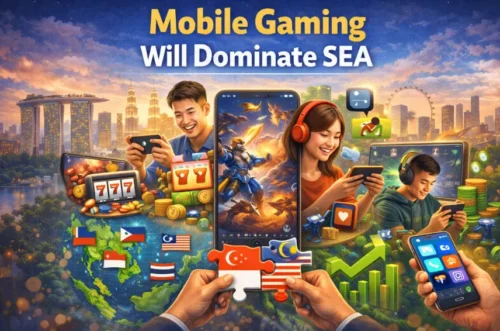
Table of Contents
Why Mobile Gaming in Southeast Asia
High smartphone penetration and reach
Most people in SEA go online through their phones, not desktop or console. Smartphones are cheaper, easier to use, and always within reach. For many players, the phone is their first and only gaming device, making mobile gaming the most accessible option across age groups and income levels. Studies of the broader gaming market in Southeast Asia show that mobile already dominates both time and spend.
Indonesia stands out as a heavyweight by games revenue, with Thailand and Vietnam also showing strong mobile growth in regional reports on SEA’s games industry.
Mobile‑first digital culture
SEA is a mobile‑first region. People use their phones daily for:
- Social media
- Payments and e‑wallets
- Streaming and shopping
Gaming fits naturally into this flow. Players can start a game anytime, anywhere — on the MRT, during kopi break, or just before sleep. Insights on SEA’s mobile gamers describe gaming as a regular habit, with a large share of consumers playing games on apps or websites each month. Mobile titles are built for short, flexible sessions, so play slides into daily life instead of demanding long, fixed blocks.
5G, edge, and cloud gaming
In 2026, it’s no longer just about “better internet.” 5G rollout in markets like Singapore, Thailand, and Malaysia has sharply reduced latency, setting a new bar for real‑time experiences. Telecom and industry analyses highlight 5G plus edge compute as key to low‑latency mobile gaming and cloud services in Asia.
This unlocks:
- Cloud gaming that lets high‑end, PC‑style titles stream smoothly to mid‑range phones, which is one of the fastest‑growing segments even if still a small share of revenue.
- Live and in‑play dominance for betting and esports, where lower ping keeps competitive matches feeling fair instead of frustrating.
The experience is more shiok because lag is reduced enough that serious competitive play on mobile finally feels stable for many users.
Hyper‑Local Payments and Onboarding
E‑wallets driving the ecosystem
The “unbanked” and “underbanked” challenge in SEA is being solved by digital wallets and local payment rails. Local giants like GCash in the Philippines, MoMo in Vietnam, and TrueMoney in Thailand dominate their home markets, while GrabPay and GoPay are deeply integrated into super‑apps. Overviews of the APAC mobile wallet landscape show how these wallets have become default payment methods for everyday spending, including games.
For mobile gaming, this translates into:
- Frictionless top‑ups and in‑game purchases
- Higher checkout conversion
- Small, frequent payments that match local spending behaviour
Payments research across SEA notes that users quickly abandon platforms that do not support their preferred local wallet or top‑up method.
Mobile as the main acquisition funnel
Because the phone is the default device, Mobile Gaming in Southeast Asia has become the primary funnel for recreational acquisition. Many new players in SEA don’t start on PC or console — their first gaming experience is a mobile title or a mini‑game inside a super app. Once they are comfortable, they move into deeper genres, esports, or even real‑money gaming, all without leaving mobile.
How Mobile Gaming Has Evolved by 2026
2020 vs 2026: what changed
Feature 2020 Perspective 2026 Reality Primary device Mobile (casual) / PC (hardcore) Mobile across casual, core, and competitive Connectivity 4G / Wi‑Fi dependent 5G + edge nodes in major urban centres Monetisation Simple one‑off in‑app purchases Subscriptions, battle passes, and hybrid models Social layer Basic leaderboards and text chat Integrated voice, squads, and persistent social hubs.
Mobile Gaming in Southeast Asia are no longer “lite” versions of PC. For many SEA players, mobile MOBAs, shooters, and battle royales now act as the main competitive arena, backed by regional tournaments and streaming ecosystems.
AI‑powered personalisation
By 2026, leading mobile games in APAC quietly rely on AI to keep players engaged:
- Difficulty and pacing adjust based on how each person is playing.
- Offers, bundles, and events are personalised to spending habits and interests.
- UI layouts and featured modes shift to highlight content most likely to appeal to that player.
Industry trend pieces on APAC mobile game performance and live‑ops emphasise how data‑driven personalisation is becoming standard for top titles.
Broad Appeal: From Casual to Esports and iGaming
Casual and hardcore together
Modern mobile titles support:
- Ranked ladders and tournaments
- Deep progression and cosmetic systems
- Regular in‑game and offline events
- Spectator and streaming integration
Analysts describe SEA as one of the most exciting growth regions for mobile esports, with titles in MOBA and battle royale leading in viewership and engagement.
Mobile iGaming and betting
Mobile Gaming in Southeast Asia is also the growth engine for online betting and iGaming in SEA. Players favour mobile apps and mobile‑optimised sites because they are:
- Always at hand for pre‑match and live bets
- Quick to check during a match or commute
- Integrated with local e‑wallets and banking rails
At the same time, real‑money products must balance aggressive growth with player protection. Clear age checks, spending limits, and risk messaging are critical for long‑term trust and regulatory comfort. For operators and content publishers, aligning mobile products with responsible gaming as a growth driver turns safety features from a “cost” into a strategic advantage for retention and brand value.
Regional Differences, Same Direction
The details vary by country, but the direction is consistent: mobile on top.
- Indonesia: Largest user base and revenue share, strong uptake of competitive mobile titles and mobile esports.
- Thailand: Rapid growth, vibrant streaming and esports communities, and high usage of mobile wallets.
- Philippines & Vietnam: High mobile engagement and strong social gaming cultures, with local wallets like GCash and MoMo central to spending.
- Singapore: Smaller population but high ARPU, early adoption of 5G and cloud gaming, and advanced payment ecosystems.
Regional market and forecast reports consistently show mobile as the dominant platform across SEA’s games and mobile‑games segments.
Strategic Challenges for 2026
Even with strong momentum, mobile gaming faces serious challenges:
- Device and network diversity: Games must run well on low‑end phones and less reliable connections outside capital cities.
- Player fatigue and churn: With many similar titles and events, players quickly drop games that feel grindy or overly pay‑to‑win.
- Monetisation tension: Teams must balance fair design with revenue, avoiding aggressive ads or opaque gacha mechanics.
- Rising user‑acquisition costs: Competition for installs is intense, and performance marketing is more complex and expensive.
UA and market‑insights reports repeatedly flag crowded app stores and rising acquisition costs as key pain points for publishers and studios in SEA.
What Companies Need to Focus On Now
To lead in SEA’s mobile‑first landscape, companies should focus on:
- Mobile optimisation: Fast loading, low crash rates, and smooth gameplay on mid‑range and budget devices.
- Localisation and culture: Languages, holidays, humour, and influencers that make the game feel “from here,” not just translated.
- Payment localisation: Deep support for dominant local wallets and bank rails so top‑ups feel as natural as ordering food delivery.
- Live‑ops and events: Seasonal content, collaborations, and time‑limited events to keep people coming back.
- Responsible experience: Fair progression, transparent odds, and tools for time and spend control wherever money is involved.
Future Outlook: Mobile First, or Out
Mobile gaming will continue to dominate SEA as devices, networks, and cloud support improve. Cross‑platform ecosystems will grow, but the phone will remain the primary screen and controller for most players.
Mobile gaming is not just a trend in Southeast Asia — it is the foundation of the region’s gaming economy. Simple access, strong engagement, and wide appeal make mobile the clear winner. Mobile first, or get left behind lah.