b0nus

Why Singapore Prefers Regulated Ecosystems

18clubsg

Disclaimer: 18ClubSG is strictly an educational hub. We do not facilitate betting, and we do not promote real-money gaming. We are here to provide the intelligence you need to understand the mechanics of the iGaming world—clearly, honestly, and without the hype.

Singapore is known worldwide for being safe, efficient, and well‑organized, and understanding why Singapore prefers regulated ecosystems helps explain how it maintains trust, stability, and long‑term growth across finance, technology, and everyday services.
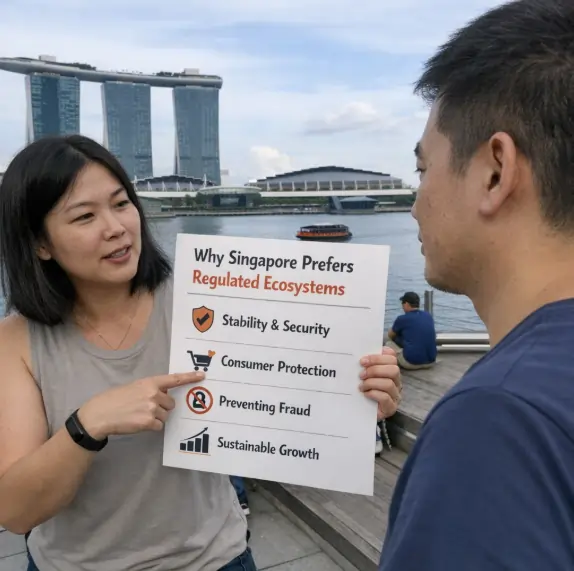
Why Singapore Prefers Regulated Ecosystems

Regulation Builds Trust

In Singapore, trust is everything. People expect systems to work properly — no funny business, no grey area.

A regulated ecosystem means:

  • Clear rules
  • Licensed operators
  • Government oversight
  • Accountability when something goes wrong

In finance, for example, the Monetary Authority of Singapore (MAS) oversees banks, insurers, fintechs, and payment providers to keep the system safe and reliable. Because of this, consumers feel safer using services, and businesses know exactly what is allowed and what is not. Less confusion, less risk, and fewer surprises.

This trust is one of the main reasons Singapore consistently ranks high in global business, safety, and governance indexes, and why many companies choose Singapore as a base for regional operations.

Why Singapore Prefers Regulated Ecosystems for Long-Term Growth

Singapore is known worldwide for being safe, efficient, and well‑organized, and understanding why Singapore prefers regulated ecosystems helps explain how it maintains trust, stability, and long‑term growth across finance, technology, and everyday services.

Instead of leaving markets and digital spaces loosely controlled, Singapore uses clear rules, strong enforcement, and consistent oversight to build confidence for both citizens and businesses. This rules‑based approach shapes everything from banking and data protection to online platforms, making Singapore a place where people “dare to use” systems because they expect them to be fair, secure, and reliable.

Stability Over Short‑Term Profit

Singapore does not chase quick wins. The country focuses on long‑term, steady growth instead of short bursts of risky expansion.

Unregulated ecosystems may grow fast at the start, but they often come with:

  • Scams and fraud
  • Data misuse
  • Money laundering
  • Harm to consumers and small investors

Once trust is broken, it is very hard and very expensive to repair. Markets can crash, and people can lose confidence overnight.

By regulating industries early, Singapore:

  • Reduces systemic risk
  • Protects consumers and investors
  • Avoids sudden market shocks and collapses

This long‑term mindset applies across sectors — from finance and tech to online entertainment and digital services.

Consumer Protection Is a Priority

Singapore’s regulators are very consumer‑focused. Rules are designed to protect ordinary people, not just institutions.

A regulated ecosystem ensures:

  • Fair practices
  • Transparent terms and fees
  • Secure transactions
  • Responsible operations

For financial products and services, MAS issues guidelines and rules to safeguard consumers, including in higher‑risk areas like digital payment tokens. If something goes wrong, there is a clear path for complaints, investigations, and enforcement.

For users, this means:

  • Less chance of being cheated
  • Better protection of personal and financial data
  • Clear legal options if there is a dispute

Clear Rules Attract Serious Businesses

Serious companies prefer serious, rules‑based markets. They do not want to invest heavily in a place where the law is unclear or changes suddenly.

Why they like Singapore:

  • Rules are clear and well‑documented
  • Compliance expectations are known from the start
  • The market is stable and predictable
  • Reputation is protected

Because of this, Singapore’s regulatory clarity attracts:

  • International investors
  • Global tech and fintech companies
  • Financial institutions
  • Licensed digital platforms and infrastructure players

You can see this in how Singapore markets itself as an economic and financial hub: Economic Development Board (EDB) and Monetary Authority of Singapore (MAS)

Instead of random operators coming in and out, Singapore builds quality ecosystems with long‑term, committed players.

Strong Governance Reduces Crime and Abuse

Without regulation and enforcement, bad actors will always find loopholes.

Regulated ecosystems help Singapore:

  • Prevent fraud and scams
  • Reduce illegal activities like money laundering
  • Track financial flows more effectively
  • Enforce responsible conduct

In financial services, Singapore uses robust anti‑money‑laundering (AML) and counter‑terrorism‑financing (CTF) standards aligned with global best practices, helping to keep the system clean and trusted. This is especially important in digital and online environments, where a single loophole can be abused at massive scale.

Singapore’s preference is clear: Prevent problems early, instead of cleaning up a big mess later.

Regulation That Supports Innovation

Many people think regulation kills innovation. In Singapore’s case, it often does the opposite.

Good regulation:

  • Sets safe boundaries for experimentation
  • Encourages responsible innovation
  • Creates a level playing field so newcomers can compete fairly

For example:

  • MAS operates a FinTech Regulatory Sandbox that lets firms test new products in a controlled environment.
  • Singapore’s Model AI Governance Framework and AI governance resources guide responsible AI use while supporting innovation: pdpc
  • Digital service and data‑sharing frameworks promote quality, security, and interoperability: imda

When everyone follows the same rules, innovation becomes healthier, more trusted, and more sustainable. Startups and investors are more confident when they know the regulatory framework is stable.

Reputation Matters

Singapore is extremely careful about its global reputation. A single major scandal can damage:

  • National credibility
  • Investor confidence
  • International partnerships
  • Its status as a trusted hub

That is why Singapore prefers:

  • Controlled growth over hype
  • Strong compliance over shortcuts
  • High standards over easy compromises

Reports on Singapore’s investment climate and financial stability regularly highlight these strengths and similar assessments by multilateral and private institutions.

Once reputation is damaged, it affects the whole economy, from tourism and trade to finance and tech. For Singapore, the risk is simply not worth it.

Data Security and Privacy Concerns

Singaporeans are increasingly aware of data and privacy issues, especially with more services moving online.

Regulated ecosystems ensure:

  • Proper collection, storage, and use of data
  • Cybersecurity standards to reduce breaches and hacks
  • User consent and transparency in how data is handled

The Personal Data Protection Act (PDPA) is the main data protection law, enforced by the Personal Data Protection Commission (PDPC). With rising digital activity and Smart Nation initiatives, strong data protection is a key part of maintaining trust in the digital economy.

Strong regulation helps keep personal and financial information safe and builds confidence in digital services.

Consistency Across Industries

One key reason Singapore’s model works is consistency. The same regulatory philosophy shows up across:

  • Banking and finance
  • Healthcare and insurance
  • Transport and logistics
  • Digital platforms and online services

This creates:

  • Predictable systems for citizens and companies
  • Easier compliance across different sectors
  • Strong institutional trust over time

Smart Nation policies also emphasise trust, security, and interoperability across sectors. People know what to expect, and businesses know how to operate properly without constantly guessing what the authorities want.

A Culture That Values Order and Responsibility

At a deeper level, regulation fits Singapore’s culture and social mindset.

Singapore values:

  • Order and predictability
  • Responsibility to the community
  • Social harmony
  • Careful risk management

Why Singapore Prefers Regulated Ecosystems align naturally with this mindset. It is not about control for control’s sake — it is about collective safety, fairness, and long‑term progress.

Final Thoughts: Regulation as a Competitive Advantage

Singapore prefers regulated ecosystems because they:

  • Build deep, durable trust
  • Protect consumers and investors
  • Attract serious, high‑quality businesses
  • Reduce the risk of scandals, crashes, and abuse
  • Support responsible innovation and long‑term economic growth

Instead of chaos, Singapore chooses clarity. Instead of short‑term gains, it chooses stability and credibility.

That is Why Singapore Prefers Regulated Ecosystems are not seen as a limitation — they are a strategic competitive advantage and a core part of its national brand in the global economy.

For a closer look at how these principles apply to digital entertainment, you can also see our detailed Singapore gaming market forecast.

Scroll to Top